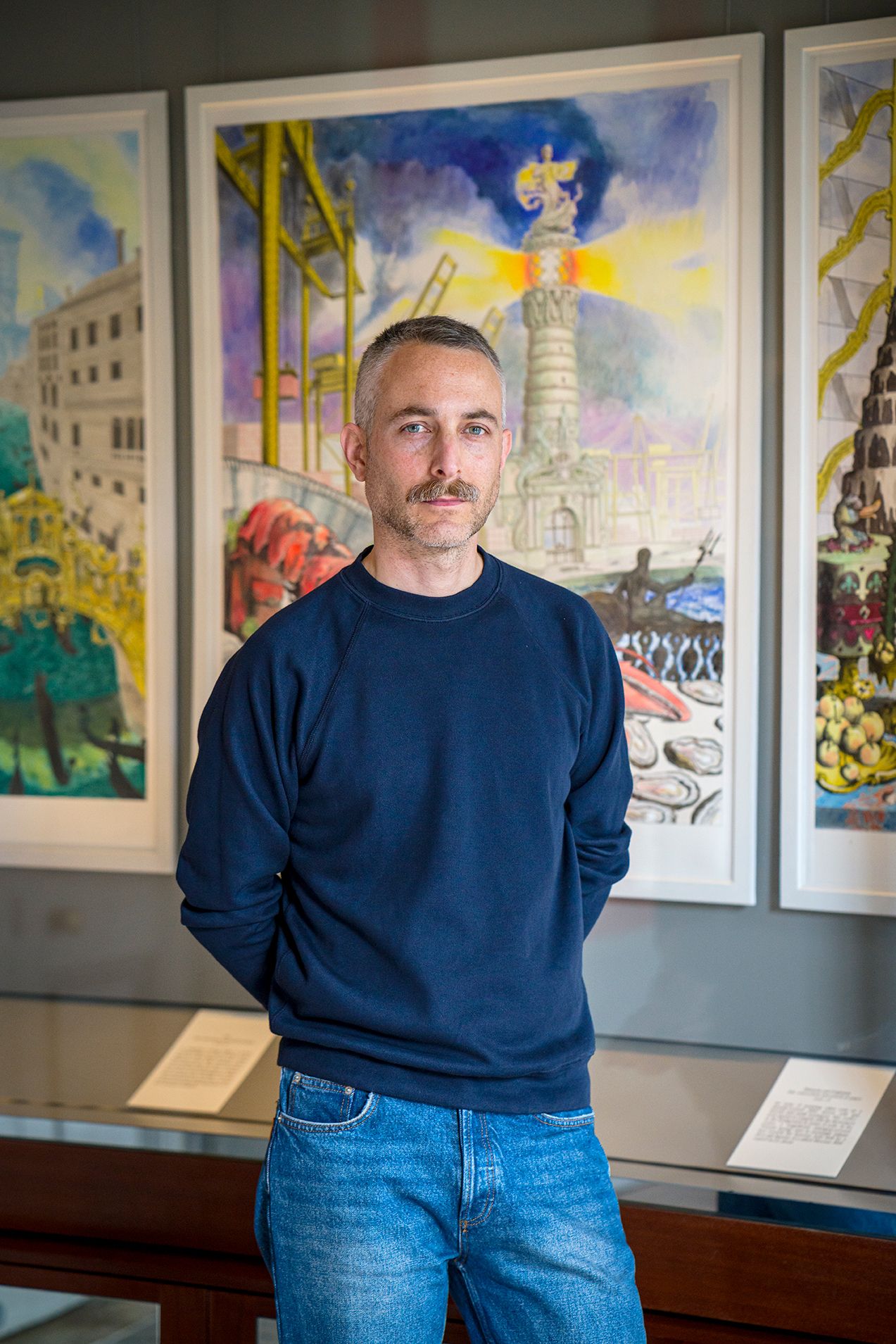
(Image credit: Photo: Garth Gardner. Courtesy of the artist, Herald St, London, and Olney Gleason, New York)Infused with historical references that range from colonial greed to land extraction, Bronstein’s decorative illustrations on paper act out history’s bond between power and ornamentation. ‘The clock as an allegory ties with my interest in decorative arts and in talking about history and geography,' Bronstein tells Wallpaper*. He considers clocks as 'objects that speak more than they are supposed to' and finds 'a lot of content about empires' in them.
For the artist who previously exhibited four antique clocks on pedestals in his 2024 show at Palazzo Bentivoglio in Bologna, such timepieces all 'have history crammed into them as allegory'. Bronstein, whose fascination with mantel clocks is also embodied in his personal collection of 19th-century French examples, is drawn to their decorative abundance rather than their ability to track time.
As a former collector of antiques – particularly silver sugar casters, a passion that started with a gift from his Argentine grandmother – he believes clock design has a uniqueness that is lacking in other decorative arts. 'There is a flat symbolic clarification of the moment and then there is the ornate case,' he says and points out the 'jog between the allegorical sophistication and the numbers that go around'.
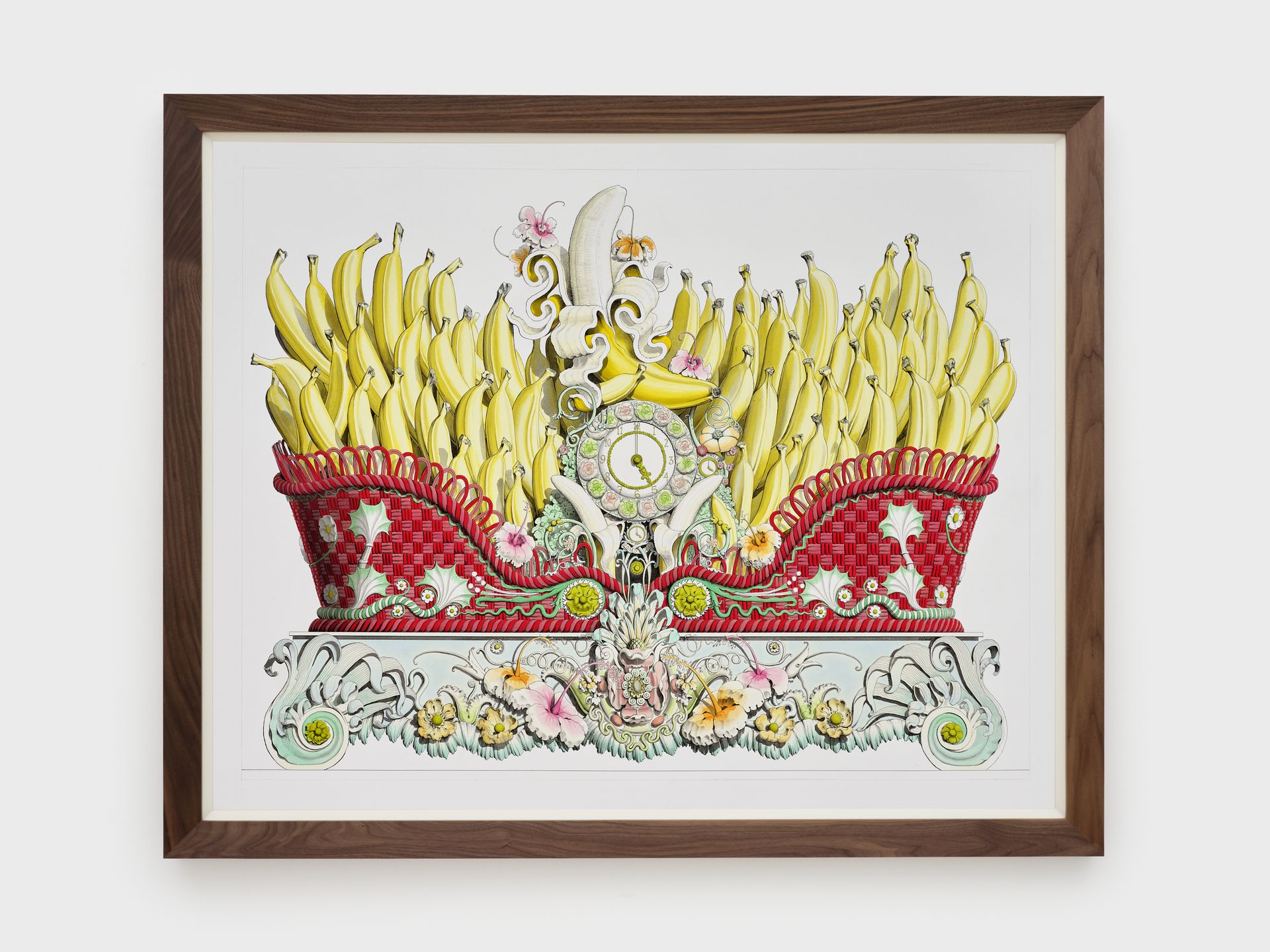 Pablo Bronstein, Banana Basket, 2026 (Image credit: © Pablo Bronstein. All images courtesy of Olney Gleason, New York)
This waltz between the globally accepted yet abstract flow of time and a desire for beautification echoes in Bronstein’s complex reference system in the show’s eight drawings. Banana Basket, for example, has one larger banana raised from the generous feast basket with its curvy peels revealing the ripe fruit. Amid the dramatically arched peels and the phallic offer, a central clock shows what Bronstein explains as the Boston time. The entire composition is a reference to the operations of the United Fruit Company and the history of the pejorative term ‘banana republic’, used for countries that, ultimately, were exploited by other nations and corporations. 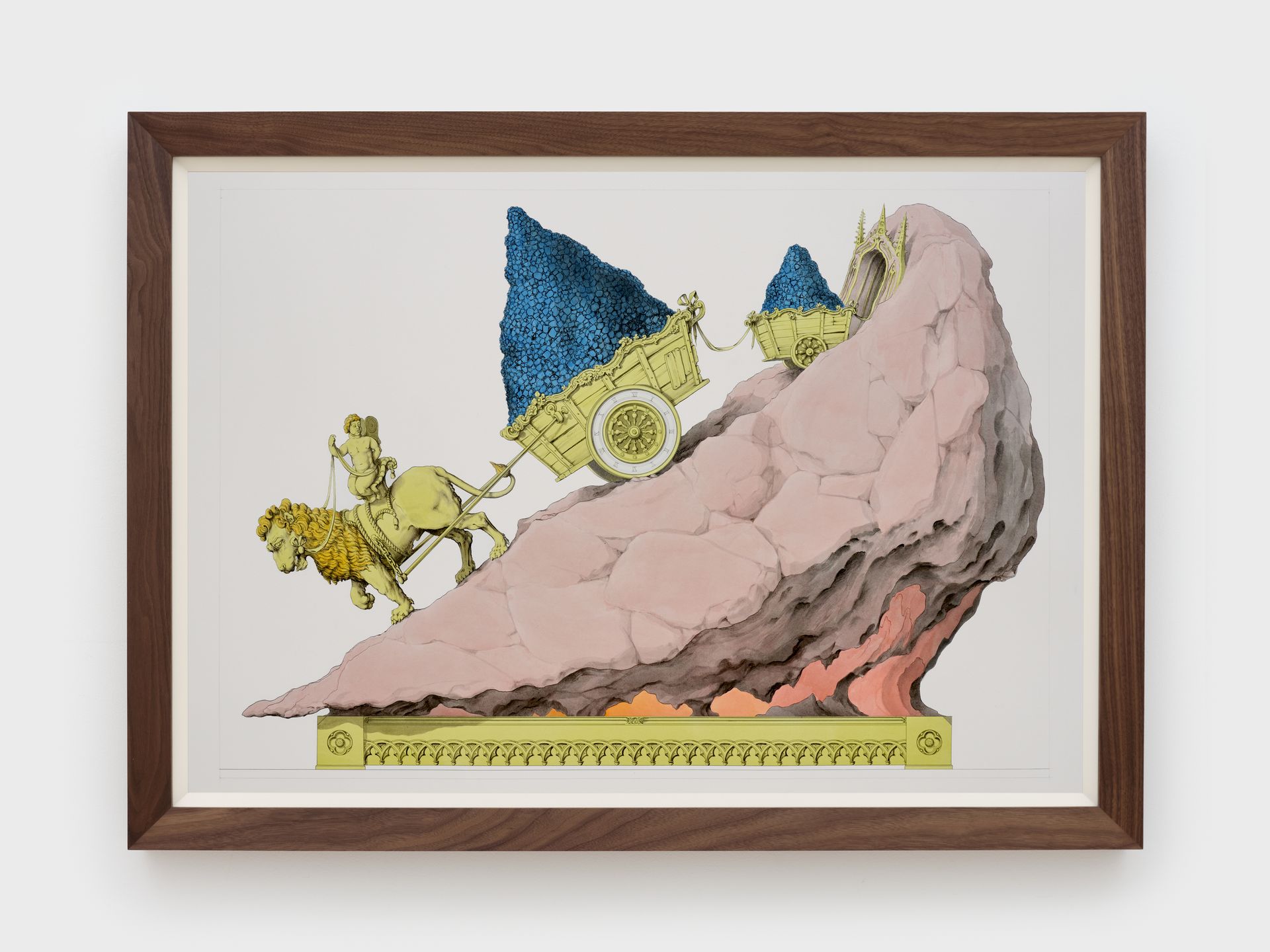 Pablo Bronstein, Coal Mine, 2026 (Image credit: © Pablo Bronstein. All images courtesy of Olney Gleason, New York)
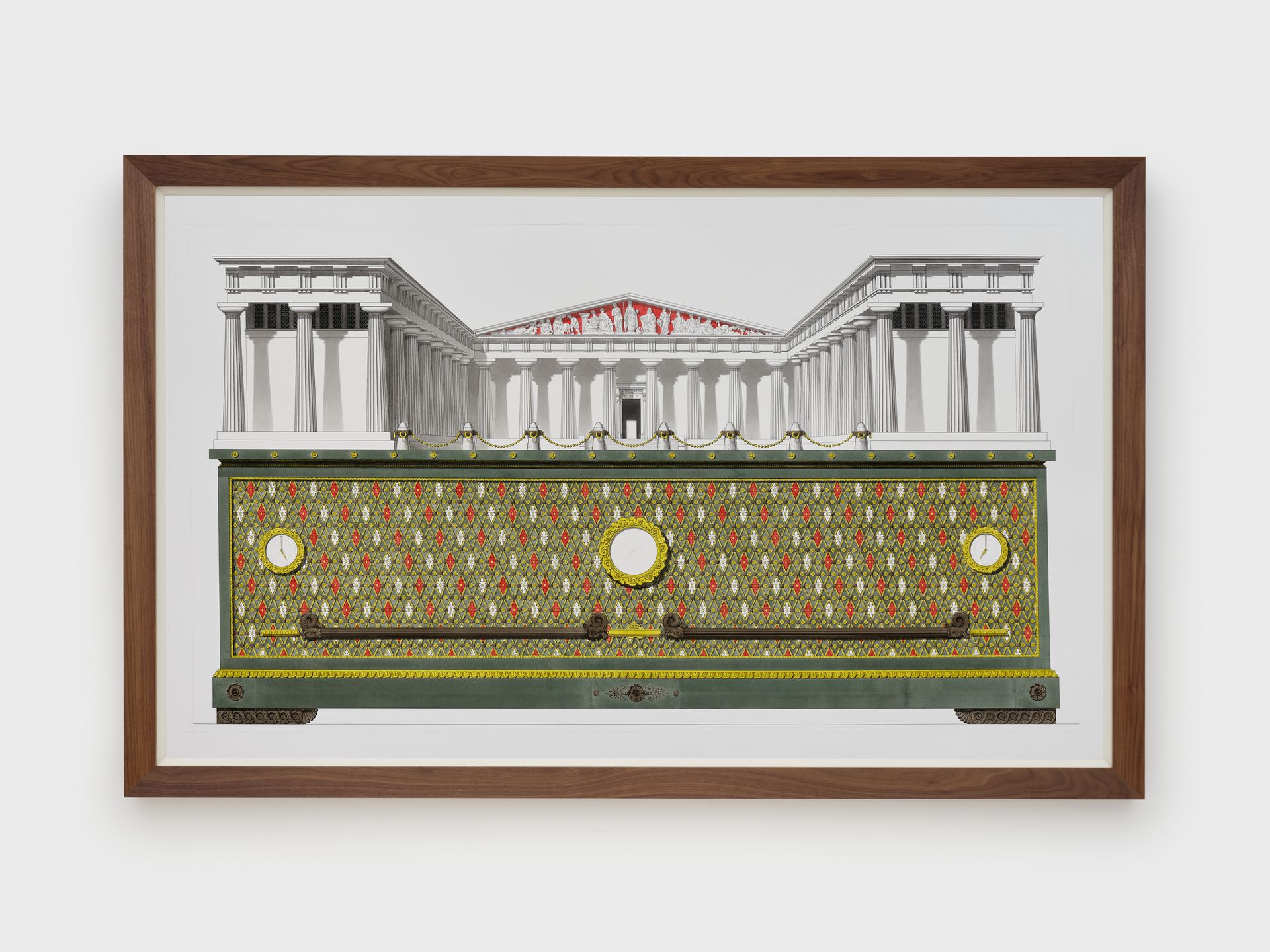
In Classical Triumphant, a grand Greek Revival building spreads across the drawing’s nearly 2m width and sits over a pedestal adorned with intricate patterning and three clocks, of which the middle is left blank. The referenced architectural period speaks to many world leaders’ inclination towards Classicism and attempts to redecorate their residences in glorifying fashion. ‘In the context of culture war,’ the artist says, 'the presence of purity and perfection signifiers is all the more aggressive.'In other drawings, a clock-biting alligator climbs a building inspired by Lower Manhattan’s windowless AT&T Long Lines building, and a lion-riding angel hauls a cart full of coals, based on a decorative object on the artist’s own fireplace.
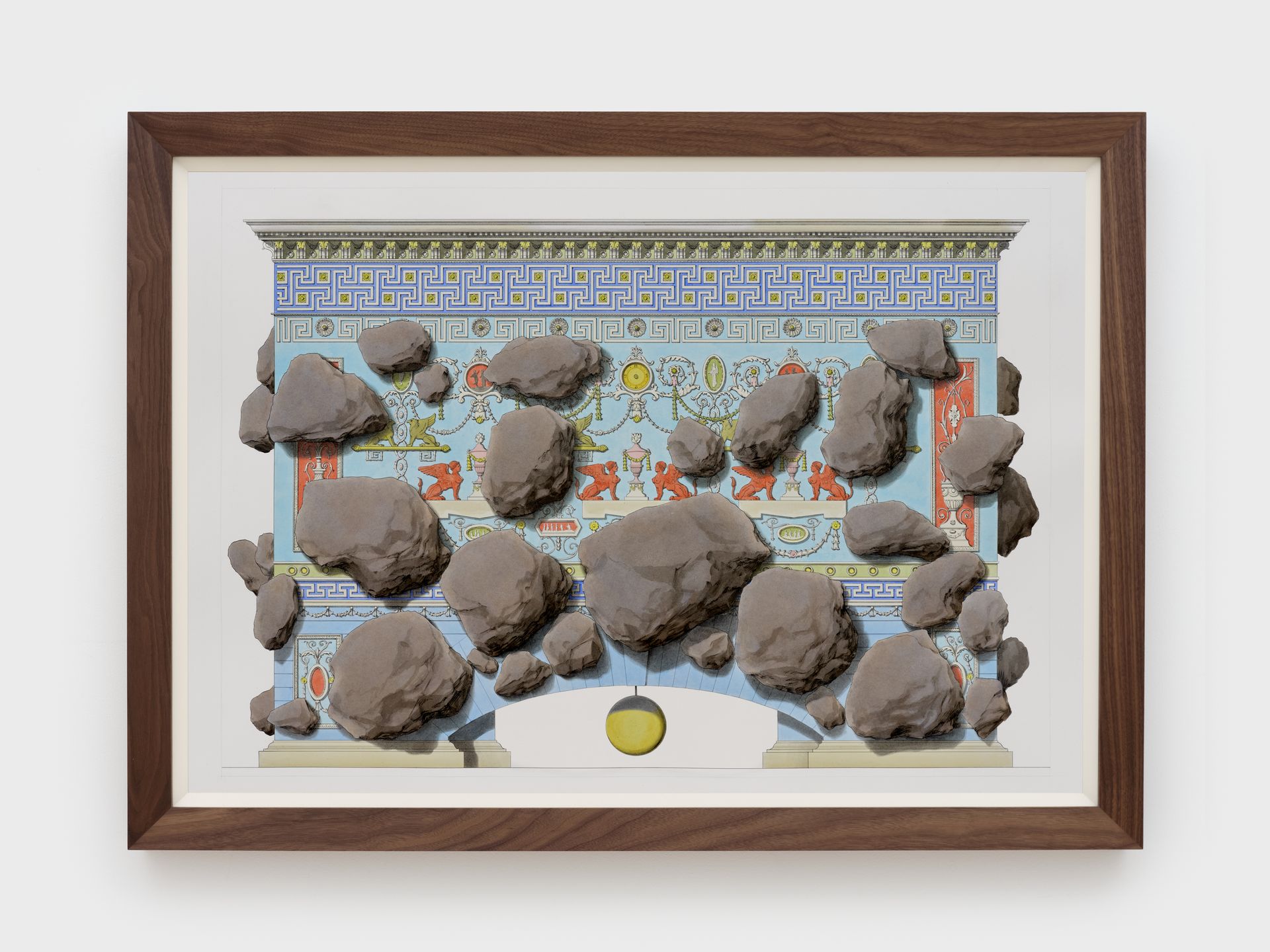 Pablo Bronstein, Rusticated Arch, 2026 (Image credit: © Pablo Bronstein. All images courtesy of Olney Gleason, New York)
Architectural, historical, or diaristic, the show’s visual cues stems from Bronstein’s own wealth of titles in his personal library. He often starts with a pencil outline while surrounded by numerous books with open pages and lets intuition usher him through the process, including adding the shading with ink. The twisted embellishments and blurred hyperboles rub shoulders with Bronstein’s inquiries about queering the power structures of aesthetics. 'Queer culture is good at pulling extremes together, such as making an enormous drama out of nothing and subverting traumatic elements with humour,' Bronstein says, and adds that this duality lets him 'worm my way into two different places at the same time'.
‘Pablo Bronstein: Clocks’ is on view at Olney Gleason in New York through 17 October 2026olneygleason.com