Tom Pearson’s Riveted Furniture Makes the Limits of a Workshop Visible
Tom Pearson’s Riveted Furniture Makes the Limits of a Workshop VisibleThe name is a provocation, not an audit. Tom Pearson’s debut furniture and lighting collection, shown at London’s APOC store during London Design Festival this...
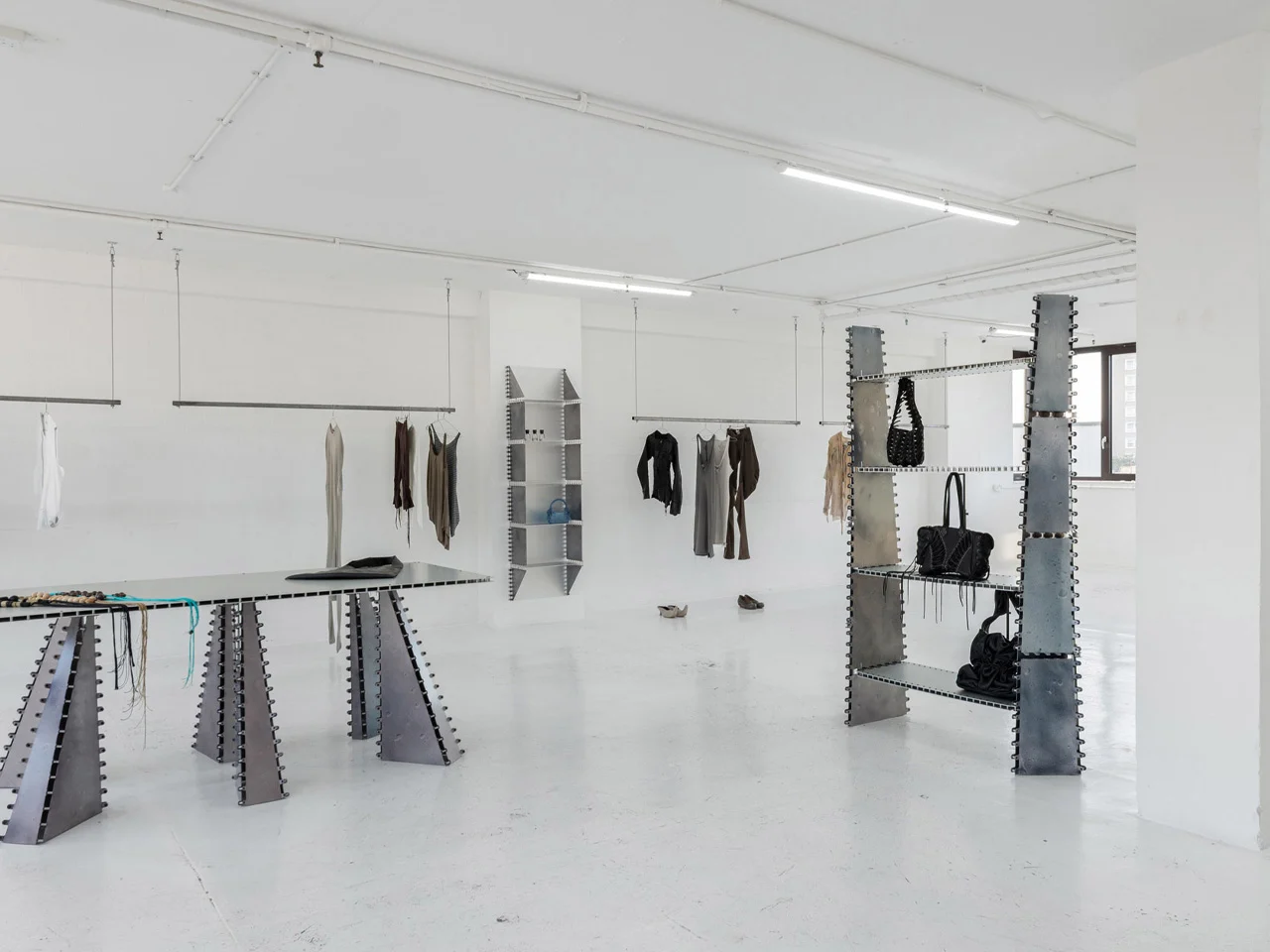
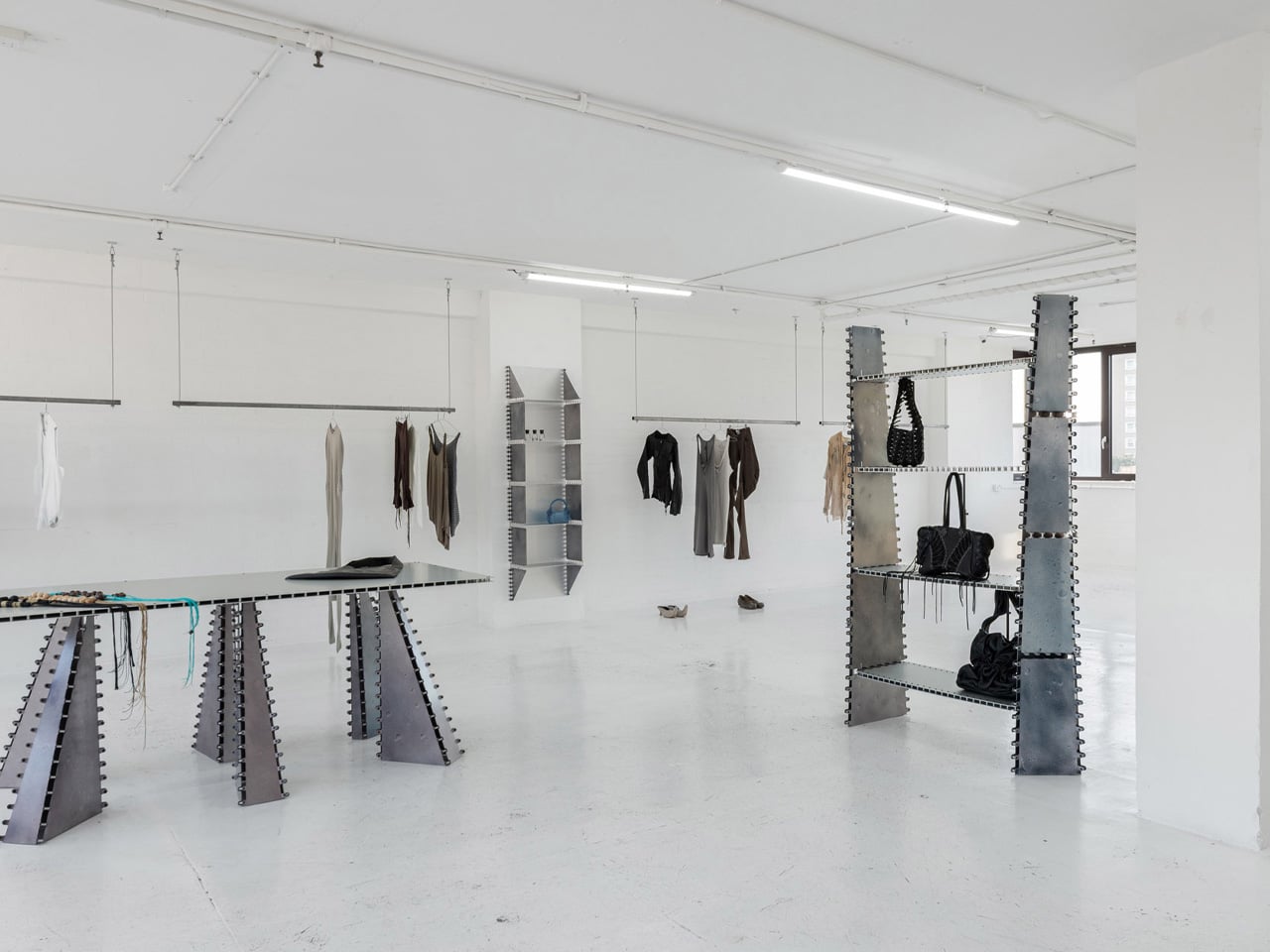
The name is a provocation, not an audit. Tom Pearson’s debut furniture and lighting collection, shown at London’s APOC store during London Design Festival this September, contains 6,264 rivets, not 10,000. “Who knows where the rest have gone?” Pearson muses. That playful ambiguity runs through the collection’s title, yet the objects themselves are the product of strict material logic, shaped at every stage by the limits of a one-person workshop in Lewisham, south-east London.
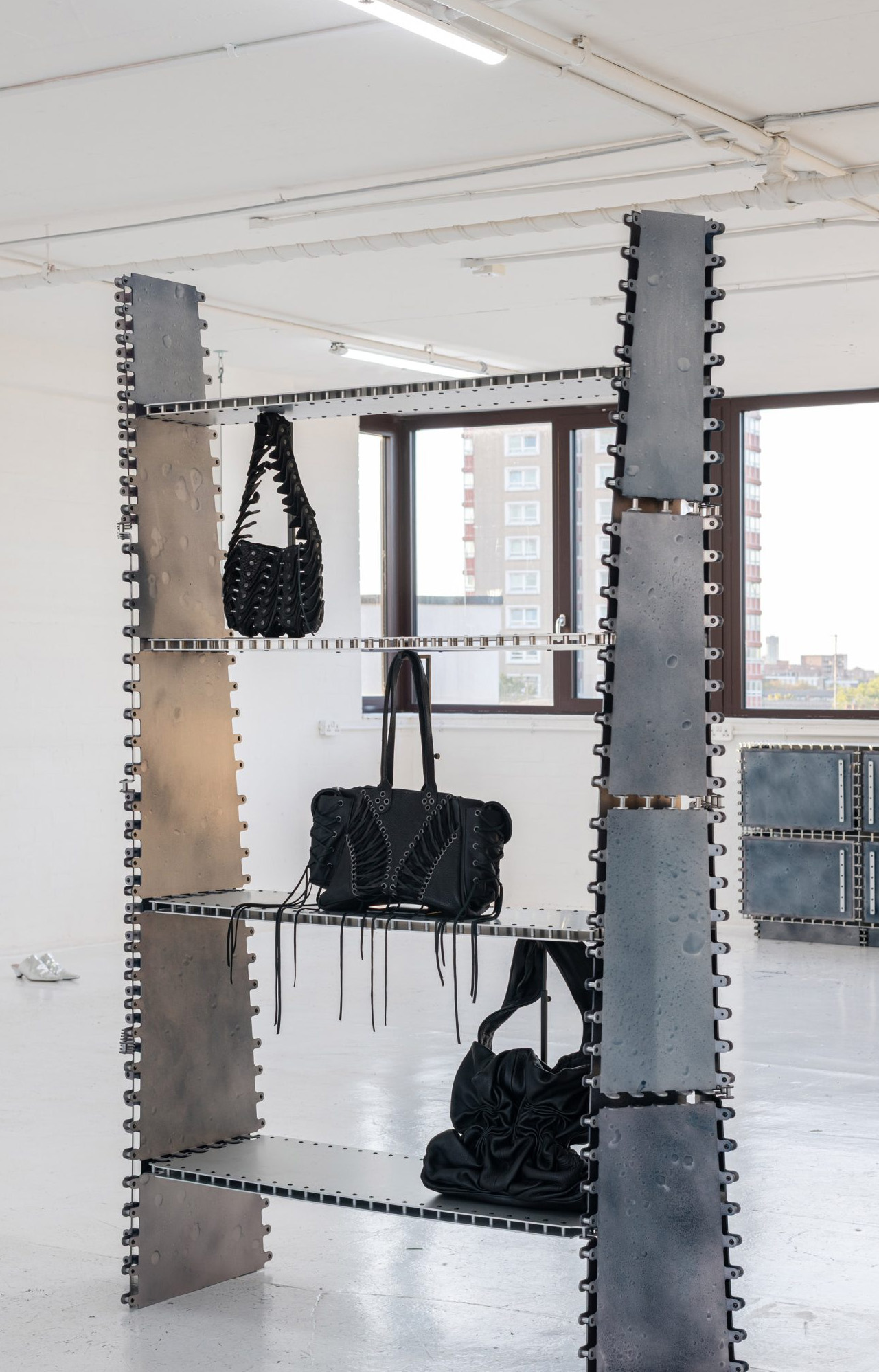
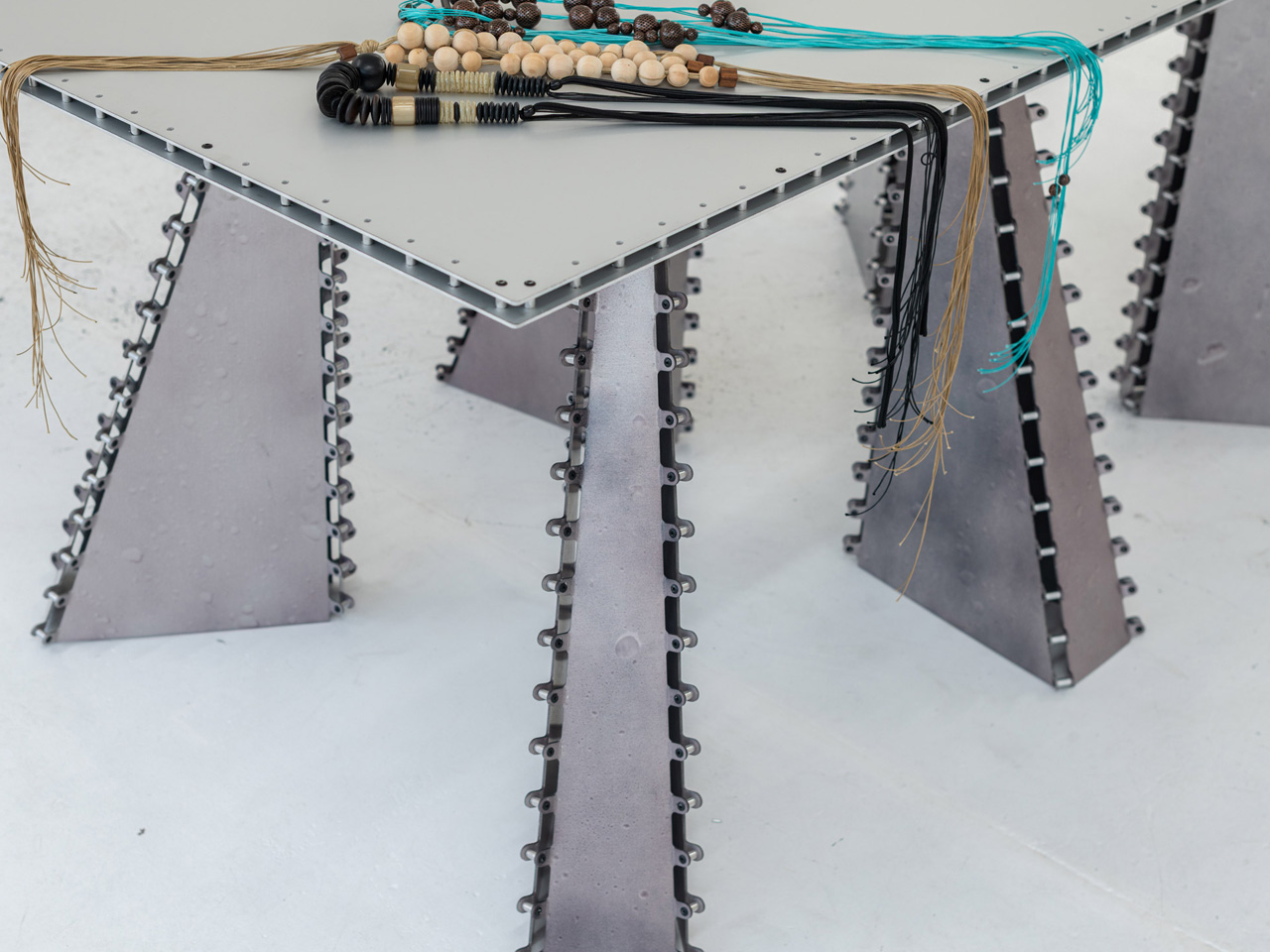
Before there were joints, there was a tank. Pearson built an anodising bath in his studio and taught himself the process, not to streamline production, but to gain control over colour. Standard anodising yields a flat, uniform finish. Pearson wanted something irregular, so he went in by hand, applying dye with brushes, airbrushes, and pipettes. The results read like water suspended mid-movement: droplet-shaped patterns frozen across the aluminium surface, each panel uniquely marked by the gesture that produced it.
Designer: Tom Pearson
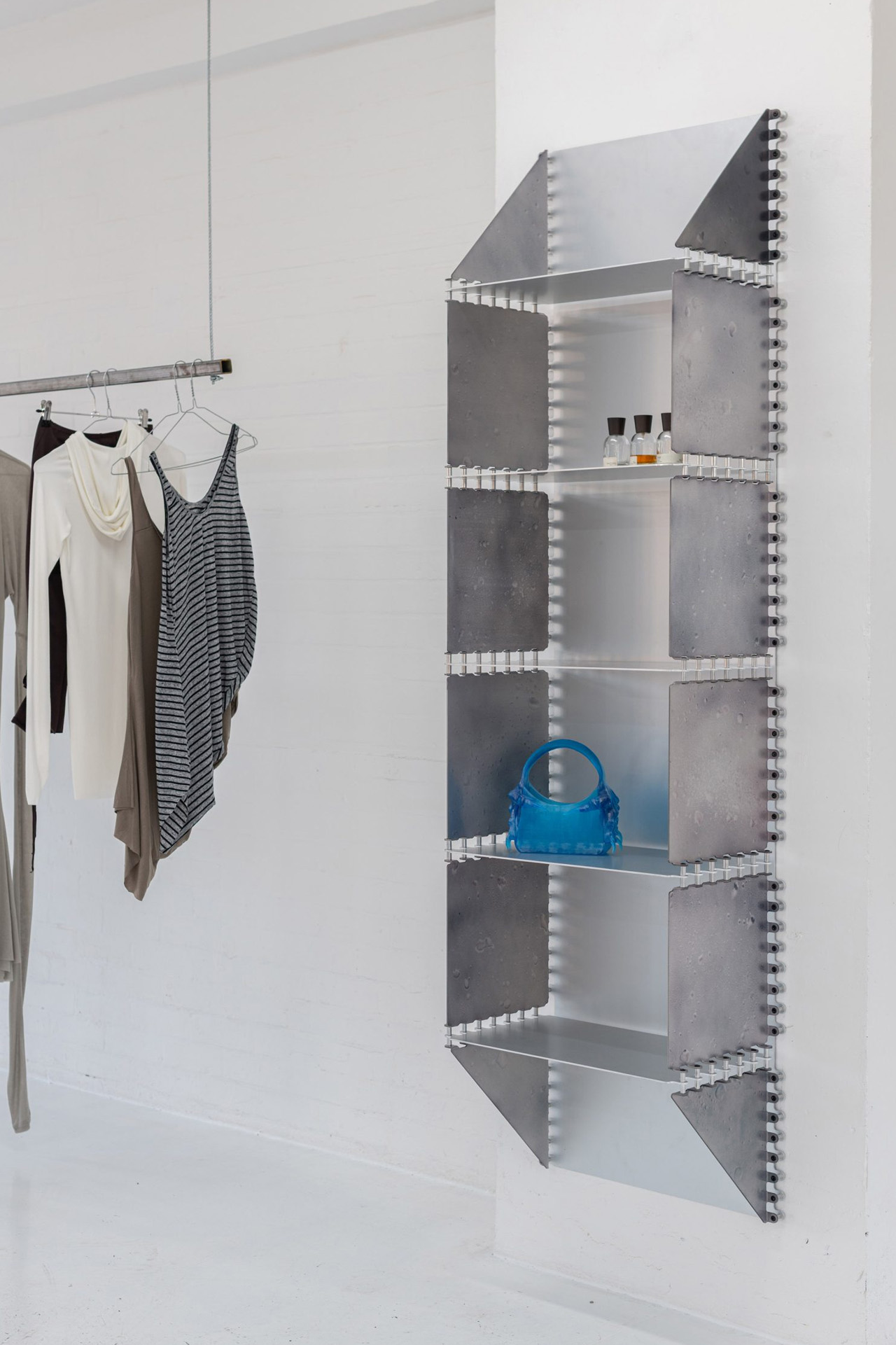
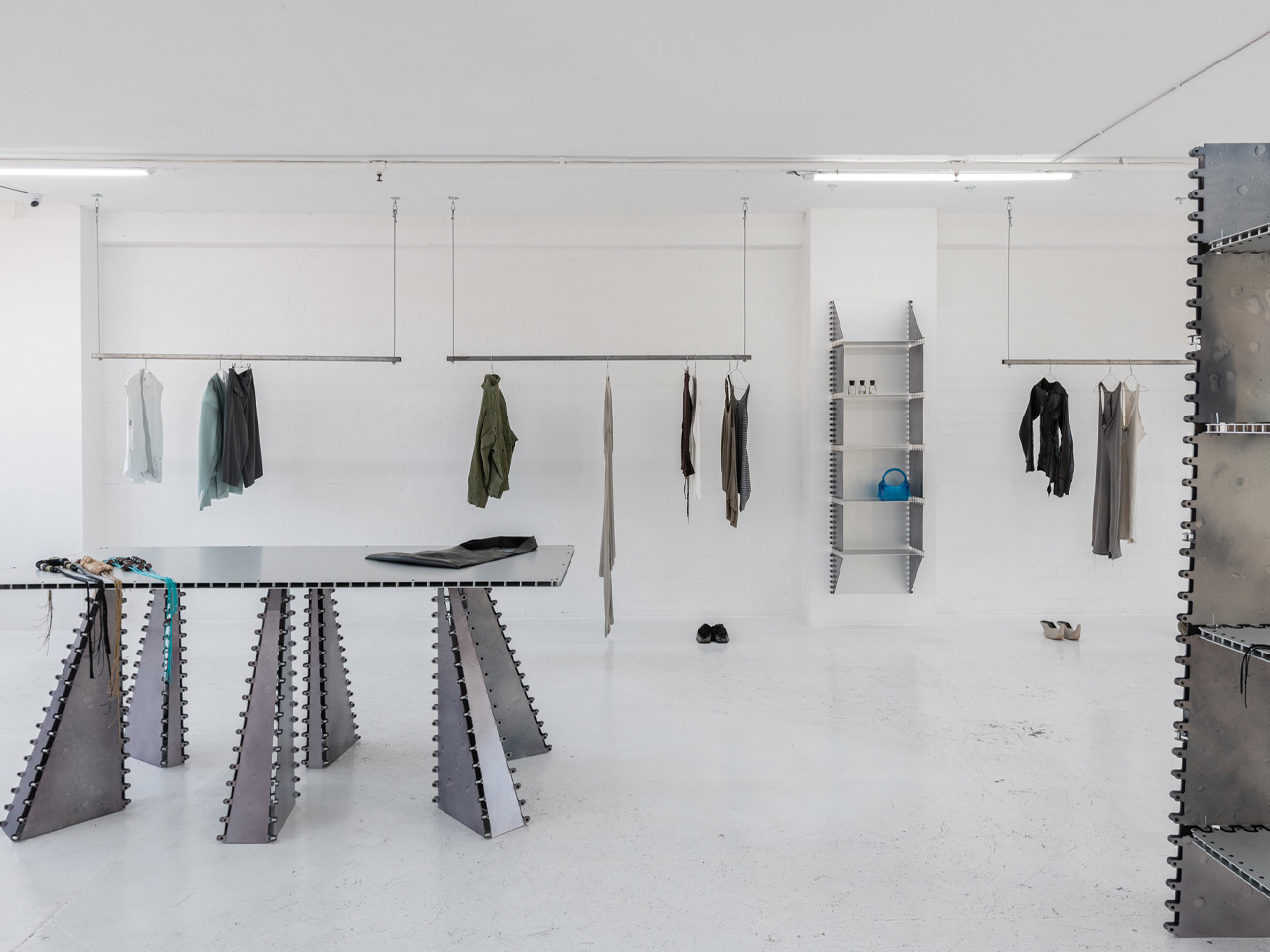
The tank had a second, unplanned consequence. Its fixed dimensions set a ceiling on how large any single sheet could be. Sheets that could not be welded to another without compromising the finish needed a different kind of joint, one that could be applied after anodising was complete. The rivet was the answer. What began as a process limit became the collection’s visual signature: rows of exposed fasteners, grid-like and deliberate, stitching planes of metal together in a way that makes the logic of construction impossible to ignore.
The decision to expose rather than conceal those joints is worth sitting with. Furniture design has a long habit of hiding its own making: flush panels, invisible fixings, surfaces that give nothing away. Pearson’s pieces do the opposite. Every rivet is a record of assembly, a mark left in a south-east London workshop where no stage of production was outsourced. The process is entirely his own, from the acid bath to the final fixing.
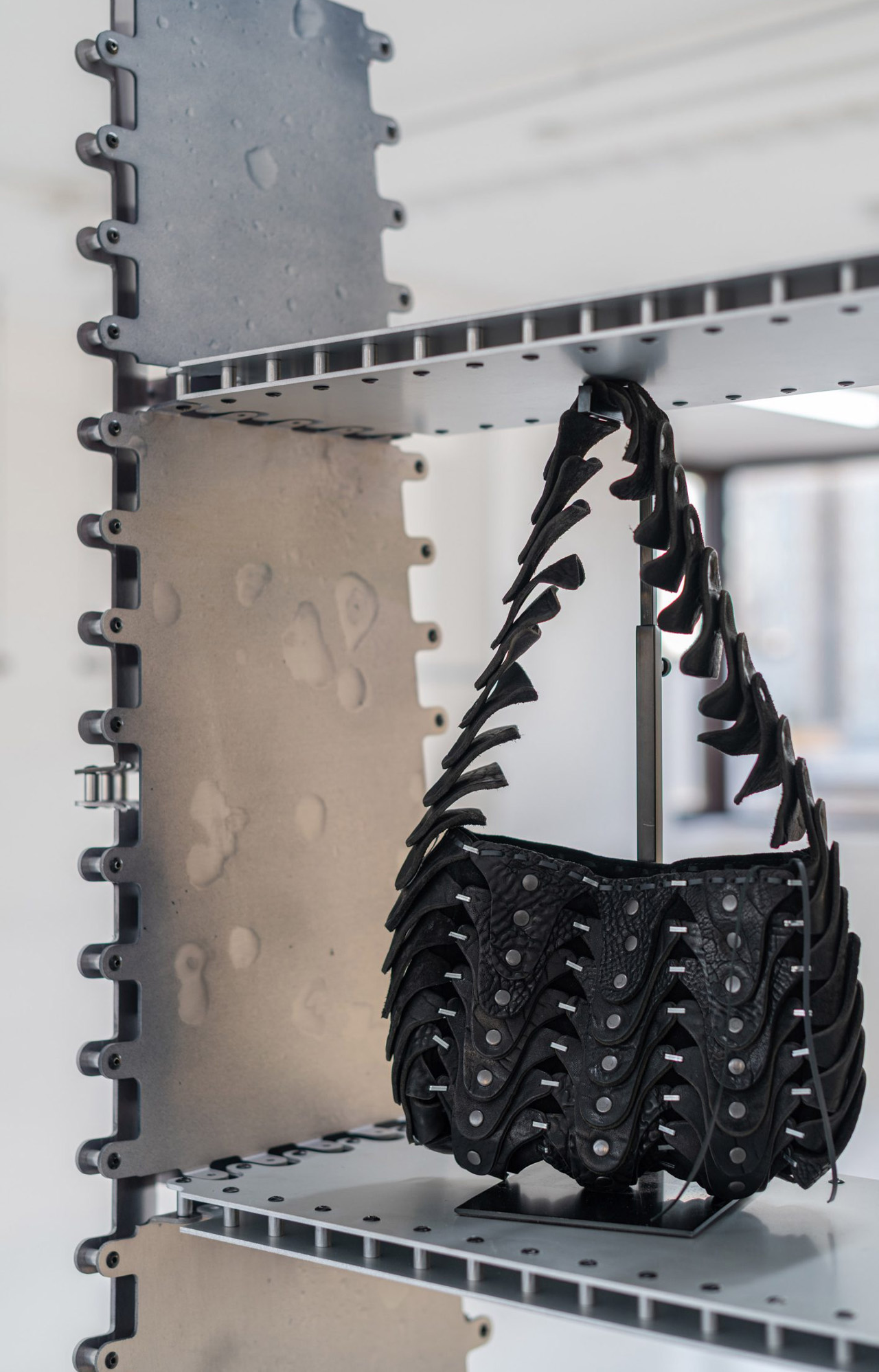
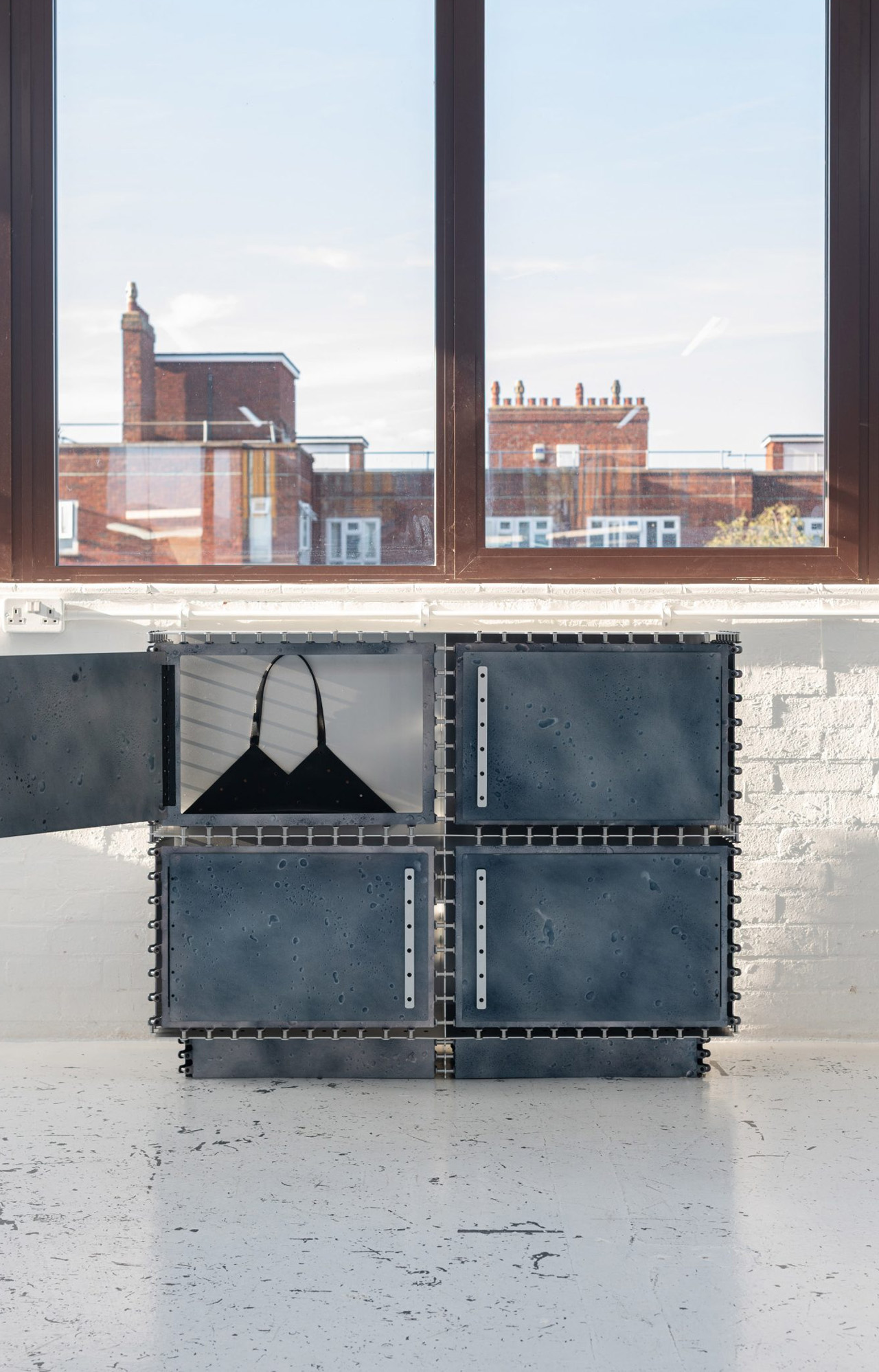
Shown at APOC, a space whose brief runs to contemporary fashion and singular objects, the collection served as display furniture and exhibition subject at once. Tables and freestanding shelves held garments; the aluminium held its own. Pieces are made to order, individually fabricated, and marked at every surface by the process that made them. They read less like production furniture and more like arguments about what metal can carry when the maker leaves the evidence in.
Pearson trained in speculative design at the Royal College of Art and previously co-founded the fabrication workshop Jamps Studio before establishing Tom Pearson Studio. The 10,000 Rivets collection is where that background becomes fully tactile. The constraints were structural. The craft was entirely deliberate.
The post Tom Pearson’s Riveted Furniture Makes the Limits of a Workshop Visible first appeared on Yanko Design.
图文图集 · 13 张





本内容采集自海外公开设计资源「Yanko Design」。原作者/机构:Srishti Mitra。原文链接:https://www.yankodesign.com/2026/09/23/tom-pearsons-riveted-furniture-makes-the-limits-of-a-workshop-visible/?utm_source=rss&utm_medium=rss&utm_campaign=tom-pearsons-riveted-furniture-makes-the-l