In Mumbai, artists are asking if embroidery can redraw the map
As textile house Chanakya International celebrates 40 years in Mumbai this autumn, we look at what happens when an atelier evolves into a cultural institution

Somewhere inside every prescribed life, another life keeps accumulating. An interior world thick with what has been lived, withheld, imagined, inherited and invented; a private geography that grows denser under the pressure of being told where a woman may go, what she may know, how she may appear. Femininity has been one of history’s persistent attempts to give that geography a border. Women have spent centuries exceeding it.
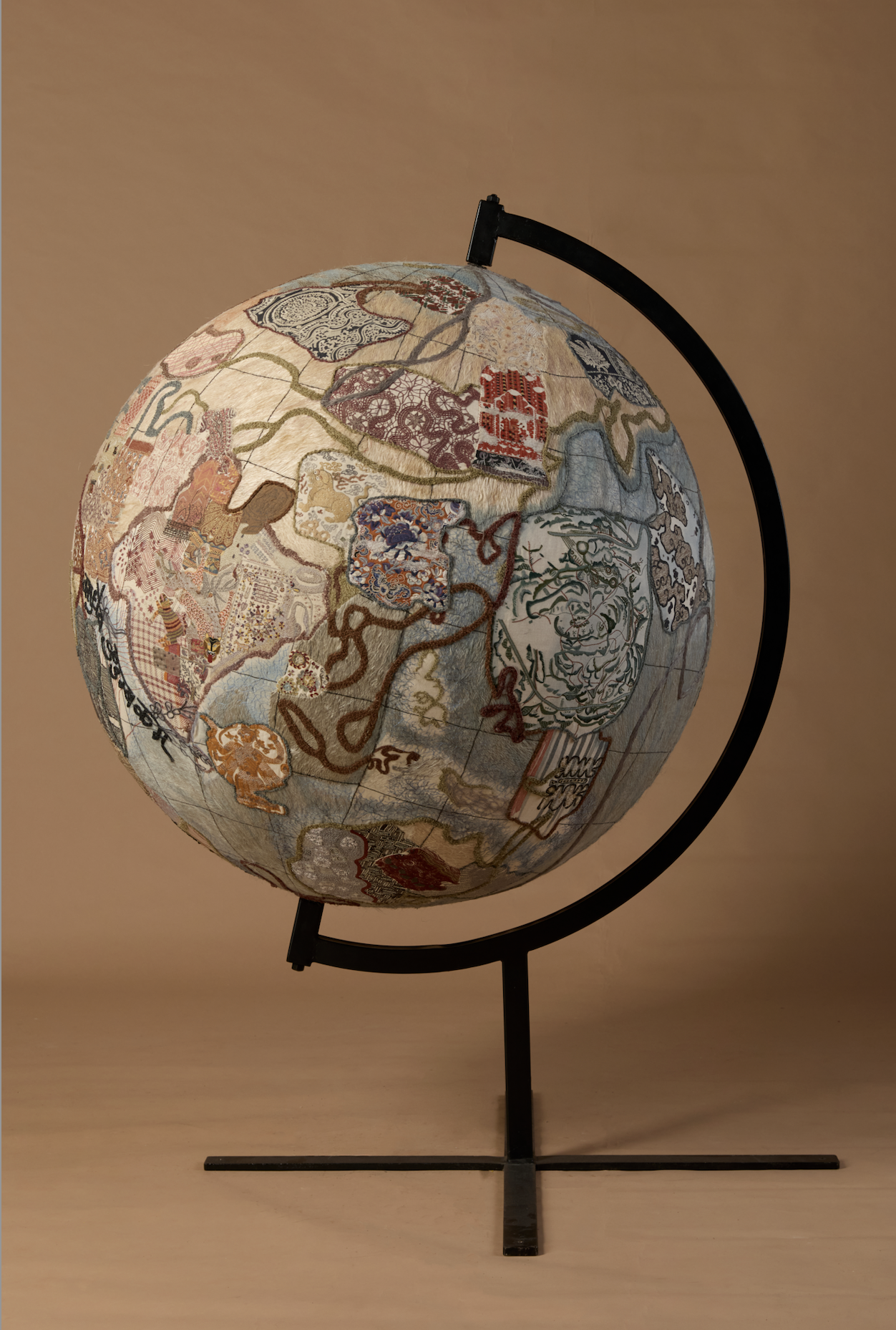
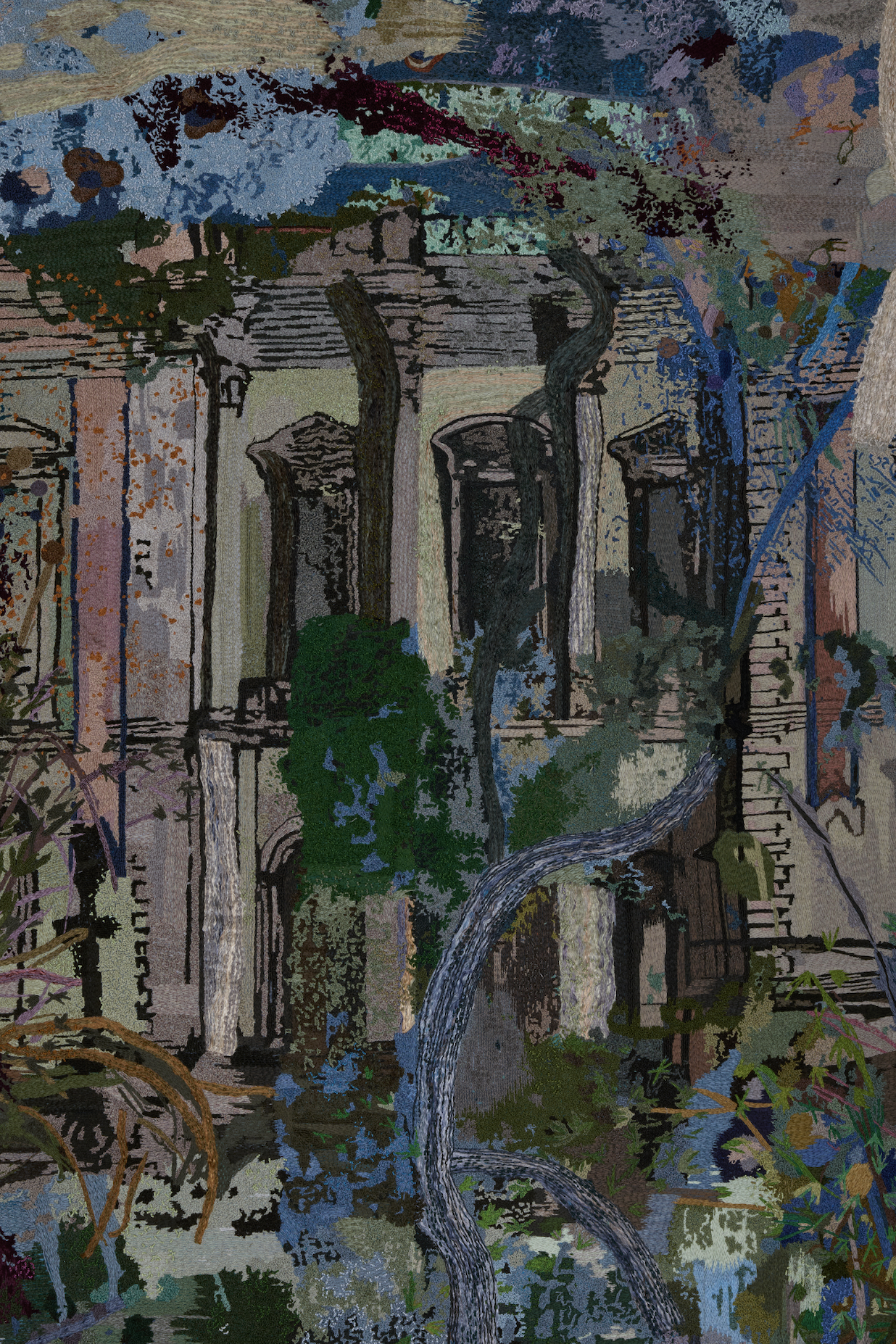
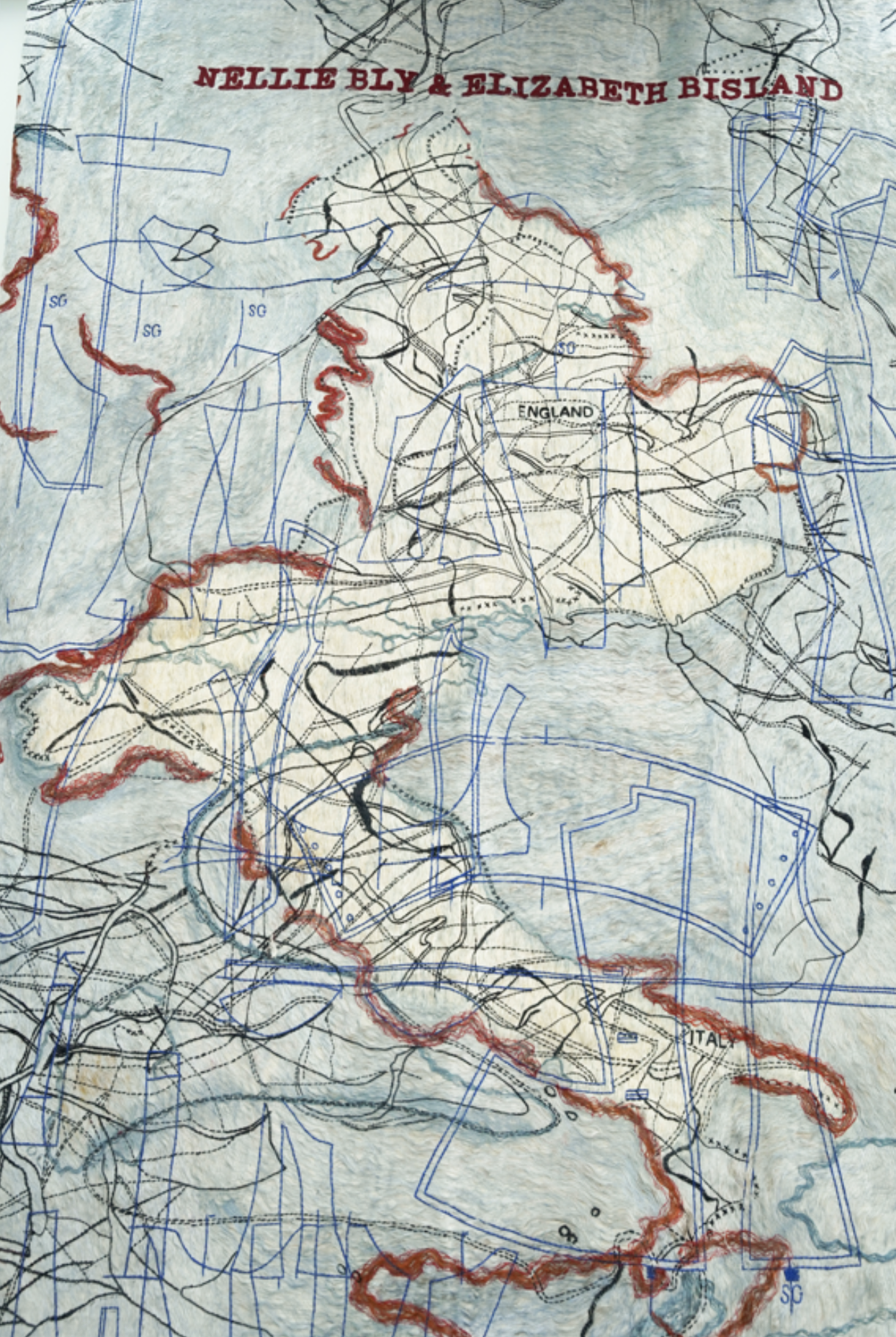
‘En Route’, on show at Mumbai’s Dr Bhau Daji Lad Museum until 20 October 2026, takes six 19th-century women travellers as its point of departure: Nellie Bly, Annie Londonderry, Gertrude Bell, Elizabeth Bisland, Agnes Smith Lewis and Margaret Dunlop Gibson. Their journeys across continents became records of landscapes, architecture, languages, textiles, manuscripts and everyday life. In 2025, Maria Grazia Chiuri, the Italian fashion designer, and Karishma Swali, founder of the Chanakya School of Craft and its atelier, encountered their writings in the Vatican Apostolic Library while researching a site-specific commission for the Vatican's Jubilee year. The resulting work travelled from the Vatican to Mumbai, where the exhibition has expanded through new works made in response to the city and the museum. Bly circled the globe in 72 days; Londonderry cycled around the world, at times wearing trousers to negotiate the practical demands of travel; Bell crossed deserts and documented the landscapes, languages and cultures she encountered; Bisland travelled westward in a race against Bly; and Lewis and Gibson journeyed to Mount Sinai, where Agnes recognised an older Syriac Gospel beneath a later manuscript. Their travels were acts of observation, scholarship and self-determination within worlds that prescribed very different limits for women. The wider Chanakya celebrations activate several sites across Mumbai, marking 40 years of Chanakya and ten years of the School. ‘En Route’ gives the occasion its most expansive geography: a project about travel that has itself travelled, gathering new histories and new makers along the way. Four enormous textile panels formed the Vatican installation, built from layered linen and hemp and worked through kantha, alongside manuscripts and two handmade globes. Embroidery is often encountered as surface: an image, a pattern, an ornament. Here, stitch sits over stitch; some layers remain visible, others partially disappear, some become completely buried, while all continue to bear structural weight. Embroidery accumulates histories, memory, labour, touch, knowledge and imagination. It makes a world through what the eye can see, what it cannot, and what it must imagine. This changes the nature of the map. A map has historically been one of the great instruments for dividing and containing territory, making land available to authority through a line. An embroidered map introduces a geography made through touch, repetition and interpretation. Its territory can remain layered, provisional and unfinished. Across the work, the words ‘Femininity, the trap’, drawn from Simone de Beauvoir, appear in large embroidered text. De Beauvoir’s own journeys offer a philosophical counterpart. Her writing on walking understood freedom through the body’s capacity for movement, exposure and encounter: transcendence describes the capacity to act upon the world and extend oneself into possibility; immanence describes the repetitive enclosure of a life prescribed in advance. The trap has an interior life too. It teaches a woman to mistake the boundaries around her for the boundaries of herself. The six women at the beginning of ‘En Route’ breached those boundaries through movement; the women of Chanakya extend the question through making and the worlds they construct. This becomes especially vivid in Antrik Vishwa, the ‘inner universe’, where Chanakya women have embroidered their immediate surroundings alongside remembered places, imagined destinations, fictional landscapes and utopias. These worlds may have no corresponding physical territory, yet they exist within the makers and within collective imagination. 'Craft itself is a language,' Swali says. Here, that language gives material form to places that may exist only in memory, fantasy or collective imagination. Craft gives them material presence. The new works made for Mumbai push this interpretive freedom further. In one student’s ‘map of memories’ recollections may be lived, inherited, borrowed or imagined, allowing another person to follow her geography and begin forming one of their own. Mumbai provides a particularly charged ground for this. The cartographic works draw on the museum’s collection to trace the city from Ptolemy’s Heptanesia, the seven islands, and the indigenous Koli communities whose land was progressively transformed through reclamation, to its harbour, mills, chawls and art deco seafront. Swali describes Mumbai as a city of ‘possibility’; Chiuri describes its ‘energy’. Together, the words capture a city shaped by movement, absorption and exchange. At Chanakya, inherited technique becomes a shared vocabulary through which individual voices emerge. This sits against fashion’s mythology of singular genius. Chiuri puts it plainly: 'Nobody is taking anything from you if you work together.' Swali’s formulation is equally precise: 'The collective does not erase the individual.' For Chiuri, creativity is made through exchange and collective intelligence. Swali locates Indian making within qala, a capacious idea encompassing making, doing and being. Above Lewis and Gibson’s Cambridge home was the inscription ‘Lampada Tradam’: I will pass on the torch. In ‘En Route’, the torch has no single bearer. It passes through archives, cities, techniques, memories, imaginations and collective acts of making. Each woman adds a layer. Some remain visible; others disappear into the structure, continuing to hold it up. The world exceeds the territories drawn to contain it. So do the inner worlds women make: accumulated, embroidered, imagined, carried forward. The 'En Route' exhibition is on display at Dr Bhau Daji Lad Museum in Mumbai through 20 October 2026 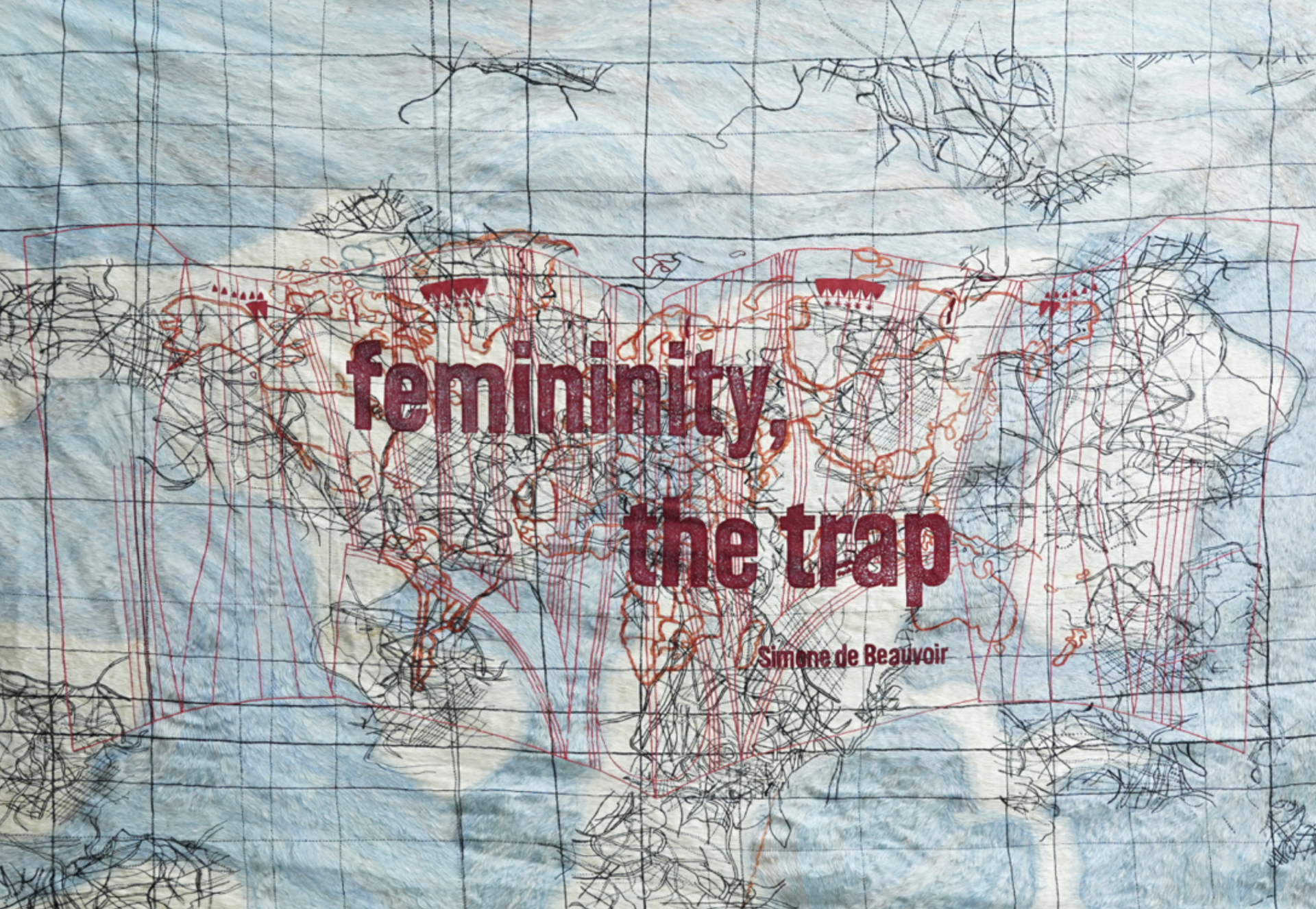
本内容采集自海外公开设计资源「Wallpaper*」。原作者/机构:Aastha D。原文链接:https://www.wallpaper.com/art/exhibitions-shows/en-route-mumbai-chanakya-embroidery-exhibition。授权说明:RSS 公开聚合输出,版权归 Wallpaper* 及原作者所有;仅引用标题、摘要与原图链接。。本站仅作学习参考,图片以原链接方式引用、未加水印、未二次分发;版权归原作者所有。