Why More Living Rooms Are Skipping the Rectangular Coffee Table
采集自 Homedit
项目图集 · 12 张
点击图片查看大图 1
1
 2
2
 3
3
 4
4
 5
5
 6
6
 7
7
 8
8
 9
9
 10
10
 11
11
 12
12
项目信息
- 设计风格
- —
- 项目面积
- —
- 空间户型
- —
- 功能场景
- —
- 色彩搭配
- —
- 材质运用
- —
案例概述
Rectangular coffee tables have long filled the space between a sofa and surrounding chairs, but they are not always the best match for how living room furniture is arranged. Curved sofas, sectionals, lounge chairs, and open seating plans leave room for shapes that follow the furniture rather than cutting across it. Round tables can overlap... The post Why More Living Rooms Are Skipping the Rectangular Coffee Table appeared first on Homedit.
设计理念
Rectangular coffee tables have long filled the space between a sofa and surrounding chairs, but they are not always the best match for how living room furniture is arranged. Curved sofas, sectionals, lounge chairs, and open seating plans leave room for shapes that follow the furniture rather than cutting across it. Round tables can overlap to create more surface area, long ovals can stretch across a wide sofa, and smaller tables can be grouped where they are needed. Stone, wood, glass, and metal also have more impact when the tabletop itself becomes part of the composition. These living rooms show how changing the coffee table shape can address spacing, circulation, surface area, and the relationship between pieces of seating. Two Round Tables Fill a Long Seating Area Without One Massive Surface Two low round tables overlap in front of the sectional, giving both ends of the seating area access to a tabletop. Their different diameters keep the arrangement from reading as a matching pair. Walnut tops bring warmth into a room dominated by brown upholstery, while thin dark legs leave more of the rug visible. Overlapping the tables also allows their combined footprint to extend across the sectional without creating one heavy block in its center. Separate Tables Can Serve Different Seats This seating arrangement spreads across a sofa and several low benches, so one table would need considerable width to reach every seat. Two round tables divide that job while leaving gaps around their edges for access. Different sizes prevent the tables from forming a rigid center line. Each can hold books, drinks, or decor, while the open space between them makes it easier to approach the seating from several directions. Three Tables Turn the Center Into a Flexible Composition Three tables sit close enough to function as one group but retain separate surfaces. Two marble tops introduce veining, while the dark wood table between them breaks up the stone. Their rounded triangular forms fit together without locking into a fixed arrangement. One table can shift closer to the sofa or chair when needed, giving the setup more flexibility than a single broad top. Square Can Work When Sharp Corners Are Softened Skipping the rectangle does not require choosing a round table. This large marble coffee table uses a near-square footprint with softened corners, creating a broad central surface without pointing hard edges toward the surrounding seats. Marble veining gives the wide top enough variation that it does not read as one blank slab. Its proportions also suit the deep seating around it, where a narrow rectangular table could leave too much distance between the tabletop and the chairs. Rounded Corners Change How a Large Table Sits in the Room This glossy table occupies considerable floor space, but its curved triangular-square form removes the four projecting corners associated with a standard rectangle. That matters in a layout where people need to pass around the table to reach the sofa. Deep red also turns the tabletop into a color feature rather than letting its size do all the work. Slim legs lift the broad surface above the rug and keep the base from adding more visual weight. An Oval Follows the Sweep of a Curved Sofa Curved seating creates a different relationship with the furniture placed in front of it. Here, an elongated marble table echoes the sofa’s wide arc and keeps its ends rounded where people approach the seats. The oval still provides the length needed for a large sofa, but it avoids the projecting corners a rectangle would introduce at either end. Its stone top adds a straight-veined material against the soft upholstered curves. A Thin Base Makes a Stone Top Feel Less Heavy Dark stone gives this coffee table substantial visual weight across the top, while the open metal framework below keeps the floor visible. The irregular rounded rectangle also softens the boundary between the table and surrounding seating. Two smaller tables nearby continue the mix of surfaces without duplicating the main piece. Together, they distribute usable tabletop space across a wide lounge area rather than concentrating everything in one central rectangle. Three Sculptural Tables Leave Space Between Each Surface Three individual tables create a loose arrangement in front of the sofa: one dark reflective piece, one pale stone block, and one warm metallic form. Their different heights, materials, and silhouettes keep each piece distinct. Open floor between them becomes part of the setup. That separation gives each table room to function near a different seat and makes the group easier to navigate than a solid table covering the same overall area. Small Faceted Tables Work Where a Full Coffee Table Would Crowd the Chairs Two compact black tables sit beside the lounge chairs rather than claiming the entire center of the rug. Their faceted forms add usable surfaces without blocking the open area around the seats. This approach works when a room needs places for a drink or book but not a large shared tabletop. Their small footprints also make them easier to reposition as chairs or other furniture move. An Irregular Table Can Become the Centerpiece Rounded triangular edges give this thick coffee table a shape that changes depending on the viewing angle. Wood grain across the top and the metallic band around its edge emphasize its broad silhouette. Its scale is substantial enough to anchor the sofa and nearby chairs without relying on a conventional rectangular outline. Curved corners also open more room along the routes leading toward the seating. A Long Oval Gives a Wide Sofa the Surface Area It Needs Long sofas still benefit from a coffee table that stretches across much of the seating, which is one reason rectangular tables remain common. This slim black oval provides similar reach while removing both short ends and every corner. Its narrow center keeps the tabletop from pushing too close to the sofa, while the tapered ends create more clearance near surrounding furniture. For a long seating arrangement, changing the outline can preserve useful surface area without filling the room with a large rectangular block. The post Why More Living Rooms Are Skipping the Rectangular Coffee Table appeared first on Homedit.
本内容采集自海外公开设计资源「Homedit」。原作者/机构:Stefan Gheorghe。原文链接:https://www.homedit.com/why-more-living-rooms-are-skipping-the-rectangular-coffee-table/。授权说明:RSS 公开聚合输出,版权归 Homedit 及原作者所有;仅引用标题、摘要与原图链接。。本站仅作学习参考,图片以原链接方式引用、未加水印、未二次分发;版权归原作者所有。
趋势对标 · 相关资讯
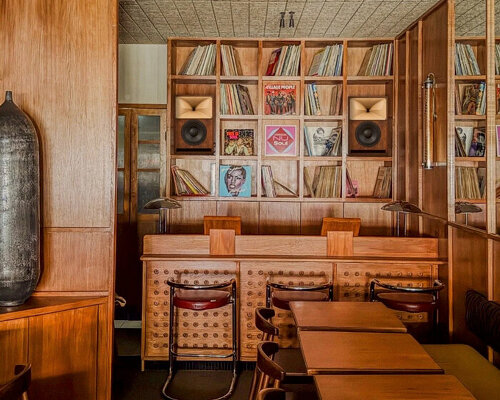
SOBO wraps paris listening restaurant in oak, vintage furniture, and acoustic panels
a paris restaurant turns into an intimate plant-base…
SOBO wraps paris listening restaurant in oak, vintage furniture, and acoustic panels
a paris restaurant turns into an intimate plant-base…

Flashlights Usually Don’t Have Personalities, Olight’s Oclip 2 Ultra Kind of Does
Flashlights Usually Don’t Have Personalities, Olight…
相似案例推荐

Woman Rolls Old Book Pages to Create a One-of-a-Kind Wreath
Damaged books do not have to end up in the tra…
Global · Homedit
Piaget’s New Swinging Pebble Sautoir Is Part Watch, Part Haute Jewelry
Do you have a penchant for pendants?
Global · Elle Decor
Inside the Standout Runways and Venues From New York Fashion Week Spring-Summer 2027
Lincoln Center, the Noguchi Sunken Garden, and…
Global · Elle Decor
Man Turns One Wood Pallet Into a Patio Grill Table With Storage
Small grills still need a surface that puts th…
Global · Homedit